Home / Services
Services
Kestrel Floorworks sticks to the visible layer of a house and takes its time over it: the floor, the tile, the paint and the moulding that pulls a room together.
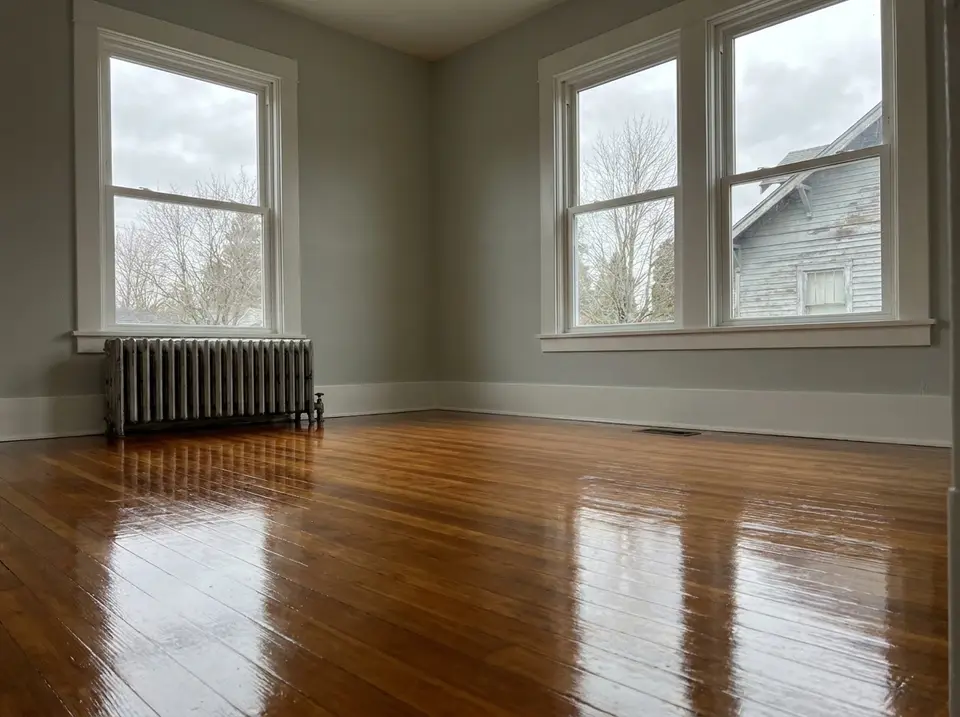
Kestrel Floorworks sands and refinishes solid wood floors and stairs in Sandpoint and around Bonner County. Wes Hadley backs the result: if the finish he put down gives you trouble, he returns and makes it right at no charge.
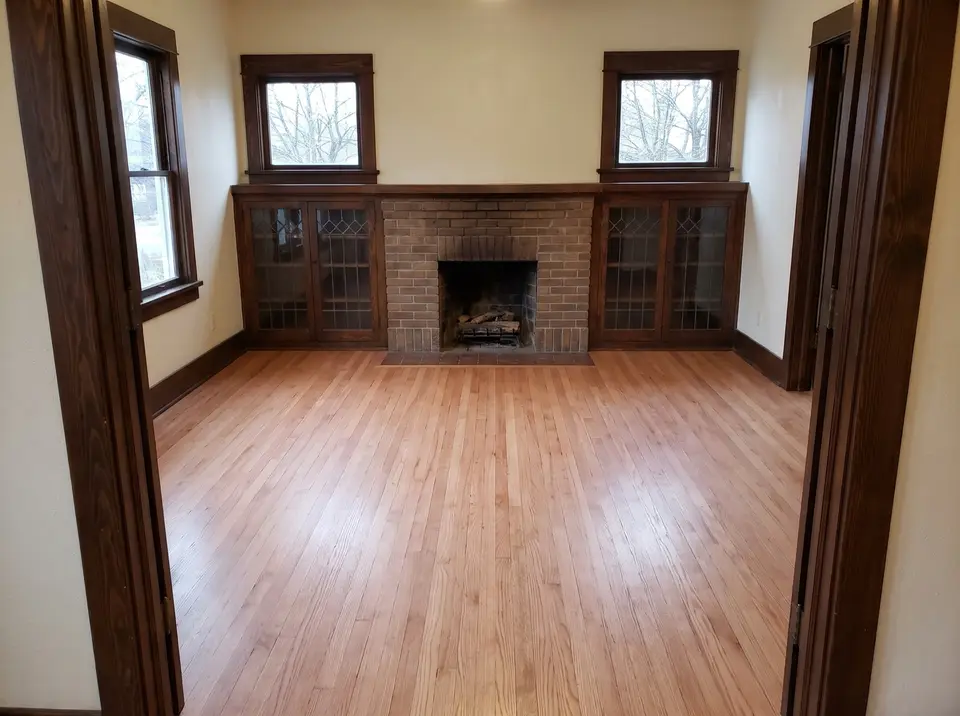
A solid board has a thick layer of wood above the tongue, and each sanding takes off only a little of it. That is why a fir floor laid in the 1920s can still be in service today. When the boards are sound, sanding costs a fraction of a new floor and keeps the one the house was built with.
Pull back a corner of carpet in a closet before you order anything new. There is often wood under there that is well worth the trouble.
Solid oak, maple, fir and pine all sand well. Engineered boards have a thin wood face under a very hard factory coat, and most should be left alone. Strand woven bamboo and eucalyptus are too dense to sand the usual way: a worn floor is buffed and top-coated, and a damaged plank is replaced.
If you are not sure what you are standing on, text a photo of the floor and of a heating vent with the cover lifted out. The edge of the board tells the story.
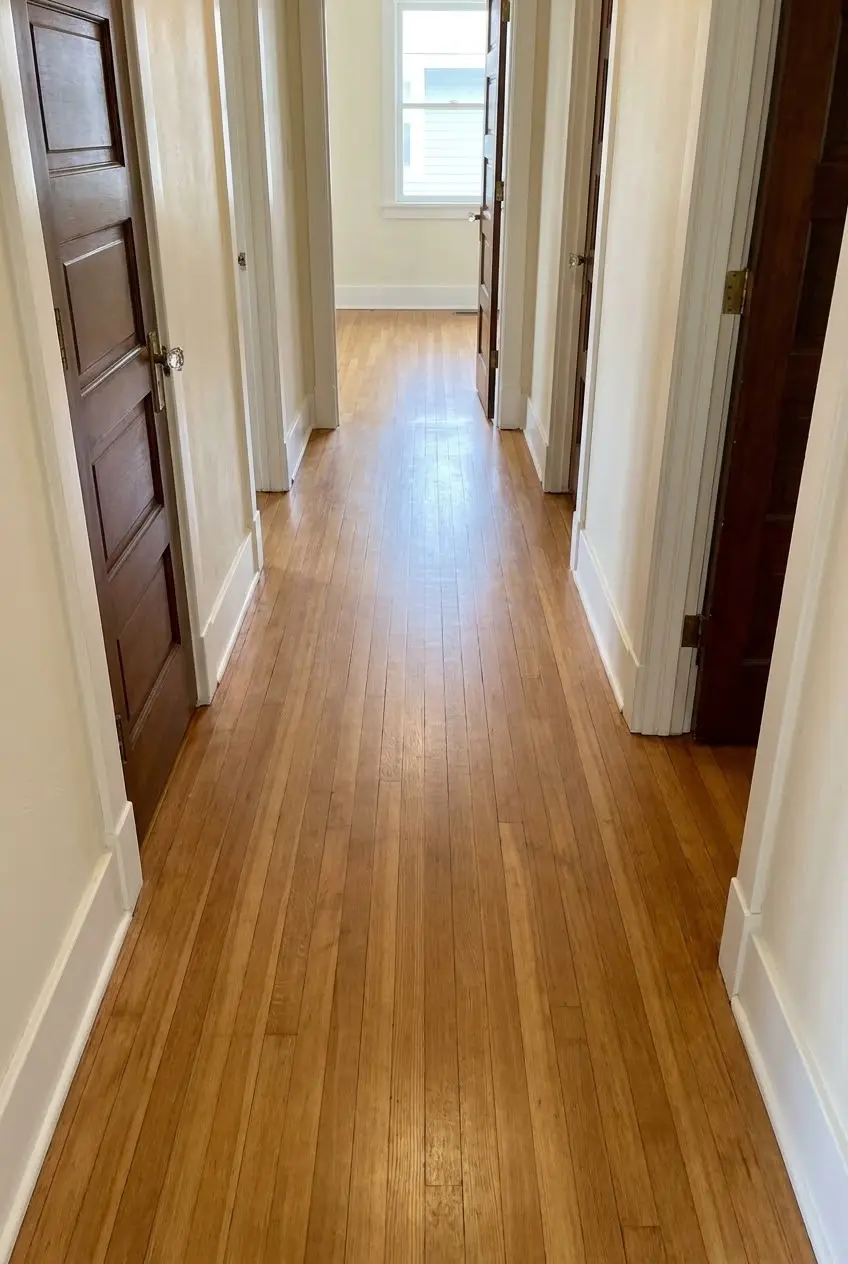
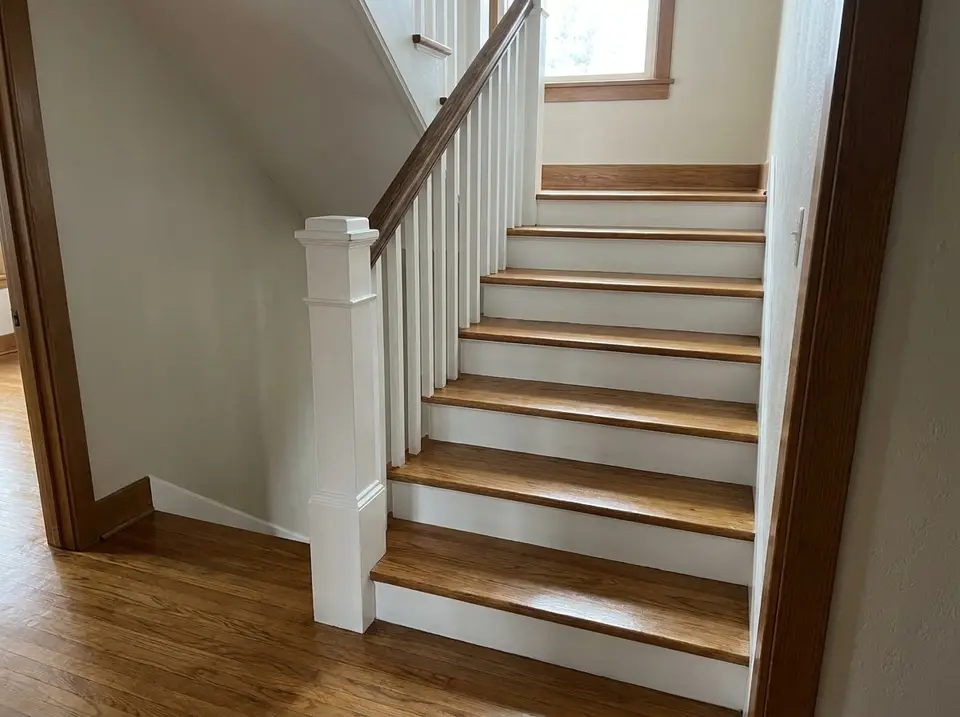
If it is solid wood, almost certainly, and more than once. Most engineered floors should not be sanded because the wood face is thin, and strand woven bamboo or eucalyptus is buffed and re-coated instead.
Yes. Kestrel Floorworks sands and finishes stair treads, risers and landings along with the floors they connect.
Sixty to 100 years with care. A solid floor can be sanded and finished again each time the surface wears out.
Kestrel Floorworks installs solid hardwood floors in Sandpoint and Bonner County, in boards finished on site or at the factory. Wes Hadley does the whole job himself: the visit, the tear-out, the subfloor prep and the nailing.
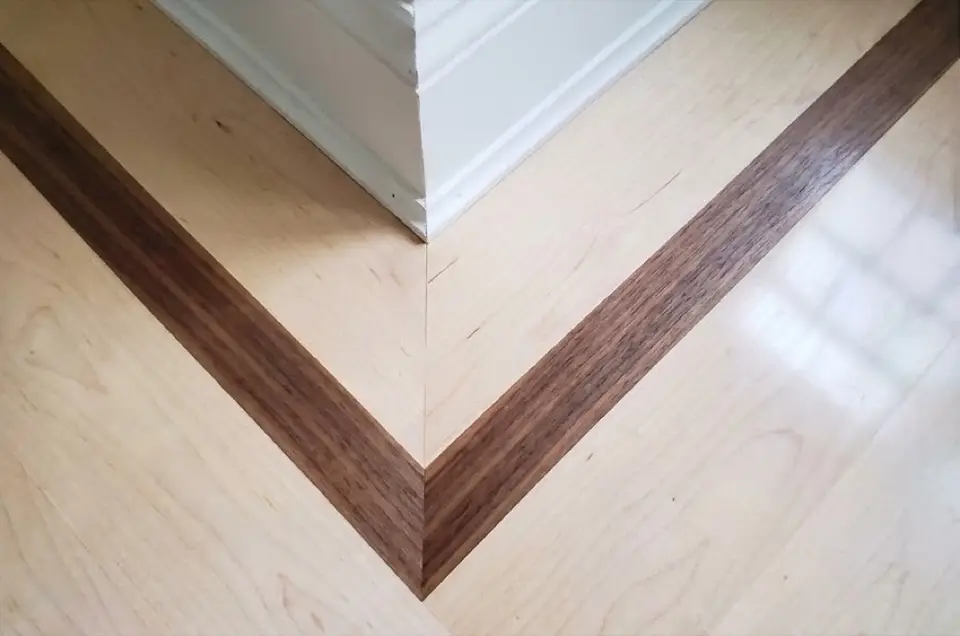
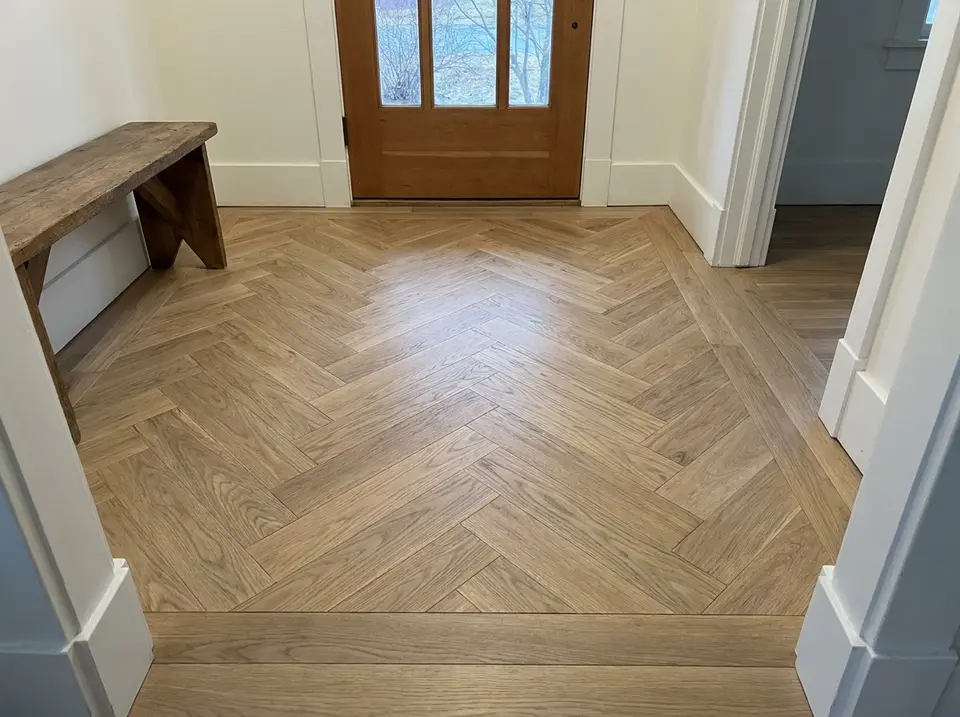
Because every board is solid, it can be cut and turned in ways a click floor cannot. Wes lays herringbone, runs a darker border strip around a room, and wraps a hearth or a tile inset in a mitred frame so the floor looks planned around it.
The gallery has examples: a walnut border around an oak great room, a herringbone entry, and boards mitred around a stone hearth.
Material for a solid floor runs about $6 to $12 per square foot. Oak, maple and fir are the usual choices here and sit at the lower end. Hardness and tolerance for moisture differ a good deal from one wood to the next, so the right board for a bedroom may be the wrong one for a mudroom.
The hours to lay a floor change very little with the grade of the wood. That is the argument for buying the better board.


Material runs about $6 to $12 per square foot, more for imported or figured species. Labor is priced for each job after a visit to measure.
Yes. Solid boards can be laid as herringbone, with a contrasting border strip, or mitred around a hearth or tile inset. The gallery shows each of these.
Yes. Tear-out and subfloor prep are part of the job, and old kitchens here often have two or three floors stacked up.
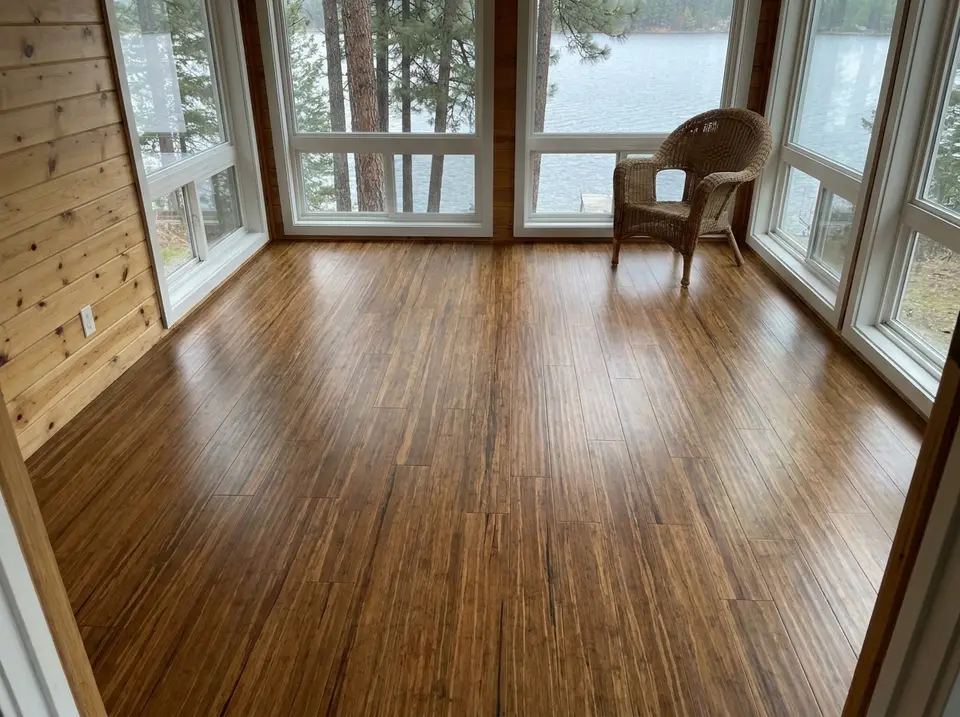
Kestrel Floorworks installs strand woven bamboo and eucalyptus flooring in Sandpoint and Bonner County, and orders it at trade prices through several suppliers. It is the floor Wes put in his own kitchen: very hard, good with spills, and built for 30 to 50 years of use.
The planks are made by pressing bamboo or eucalyptus fiber under heat until it is denser than oak or maple. The result is still a natural material with its own grain, from plants that regrow in a handful of years, and it is usually on the shelf when some hardwoods are weeks out.
Expect to pay about $4 to $7 per square foot for the material. Spread over the decades it lasts, that is good value.
You cannot sand this floor the way you would sand oak. A plank with deep damage is cut out and a new one set in. Ordinary wear is handled by buffing and a fresh topcoat, and small scratches by a tinted wax stick.
Wes also lays traditional bamboo plank and cork. Ask to borrow the sample boards.

Yes. Strand woven bamboo and eucalyptus score well above oak and maple on standard hardness tests, and they resist dents in everyday use.
Not by sanding in the usual way. A badly damaged plank is replaced, and general wear is treated by buffing the surface and applying a new topcoat.
About $4 to $7 per square foot for material, with a working life of 30 to 50 years when it is looked after.
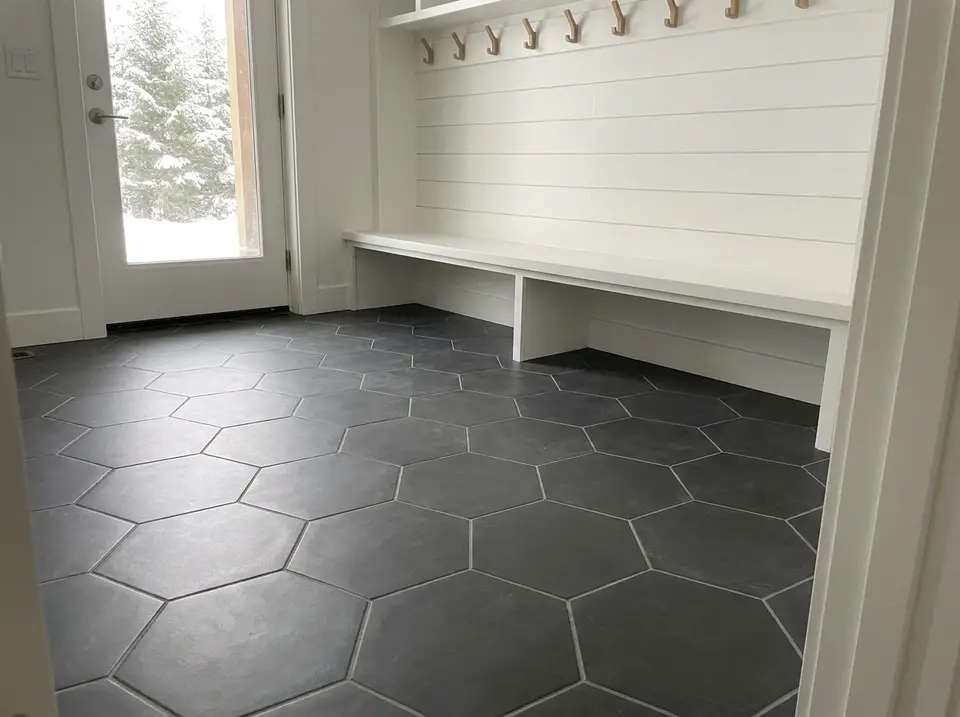
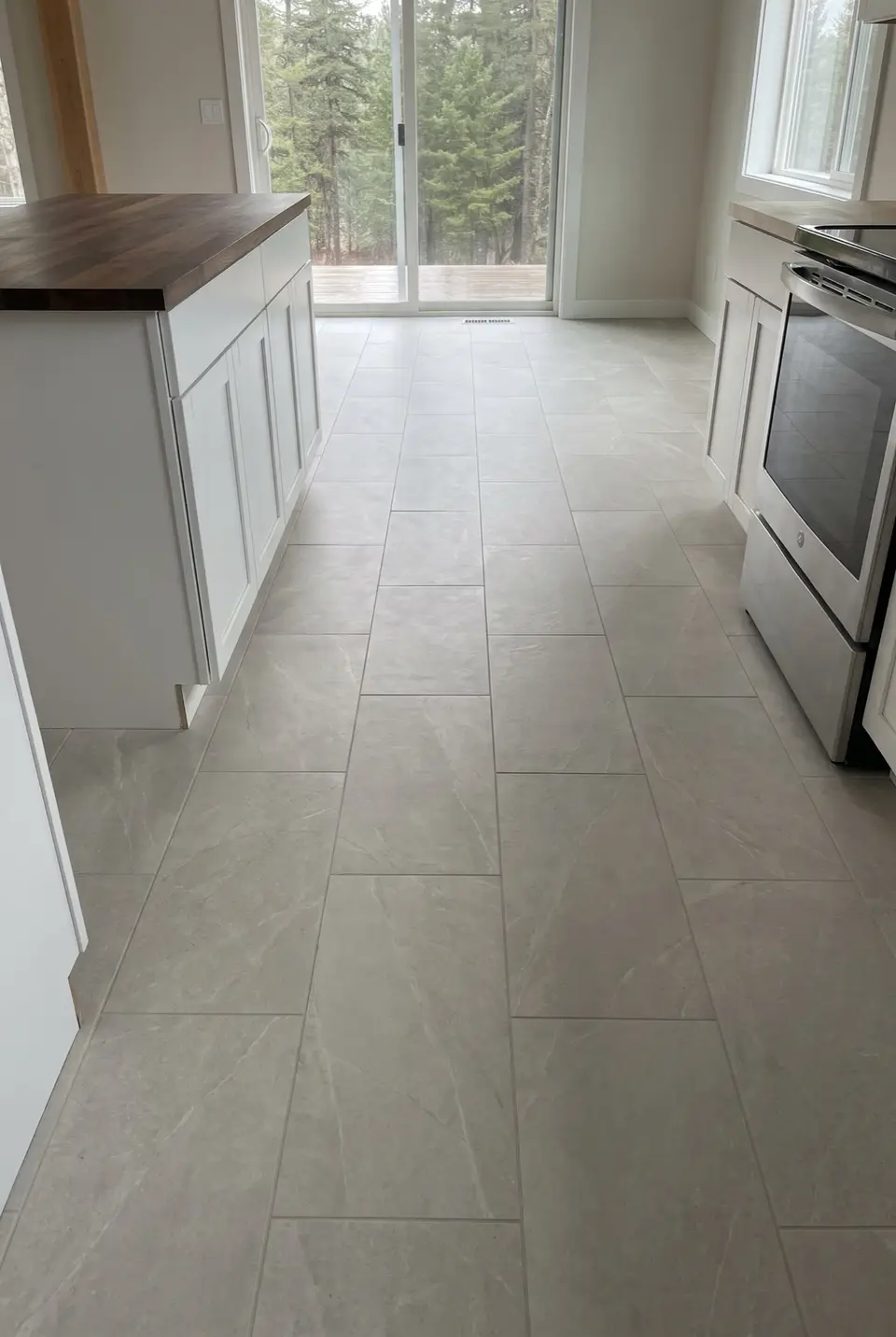
Kestrel Floorworks sets ceramic tile floors in Sandpoint and Bonner County, from small hexagons in a mudroom to large format tile in a kitchen, and takes up the old tile when a room is getting a different floor.
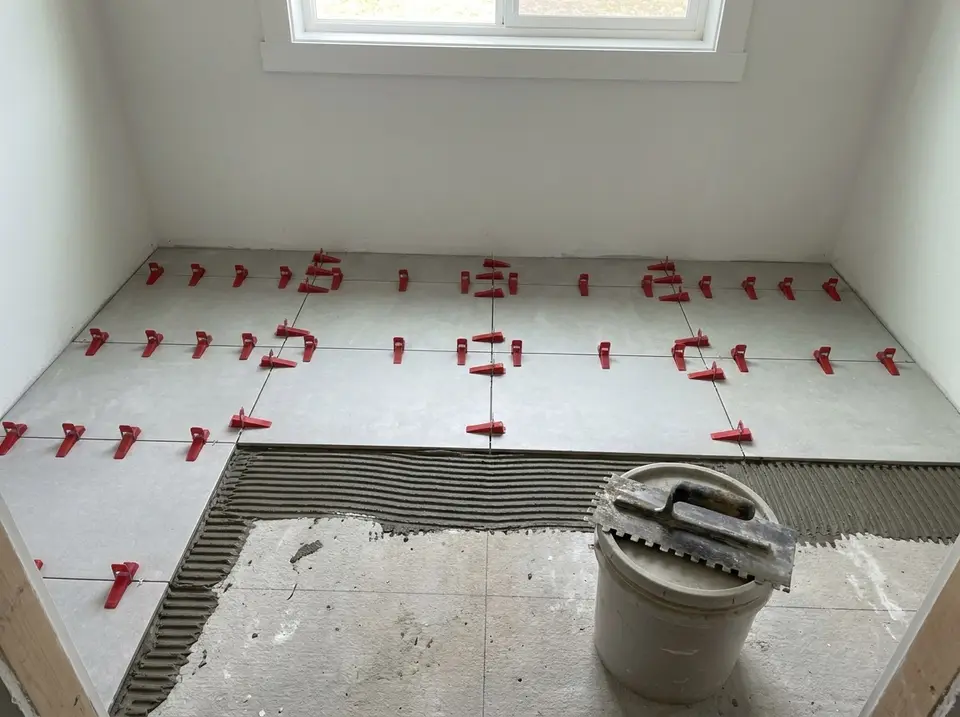
People read a tile floor by its lines. Where does the pattern begin? Are the cuts at the two walls the same width? Does one edge sit proud of its neighbor? Wes draws the layout before mixing any mortar and sets every tile with leveling clips so the surface cures flat.
In a North Idaho house the tile is usually where the snow comes in: the mudroom, the entry, the hearth. Since Wes lays the wood as well, the joint between the two is planned from the start, with a mitred wood frame around the tile or a border strip, not a metal bar added at the end.


Yes. Taking up the old floor is part of the job, and the surface underneath is flattened before anything new is set.
Kestrel Floorworks sets ceramic tile floors, and the gallery shows a hexagon mudroom floor and large format kitchen tile. Moving plumbing, and any structural work, is outside what the business does.
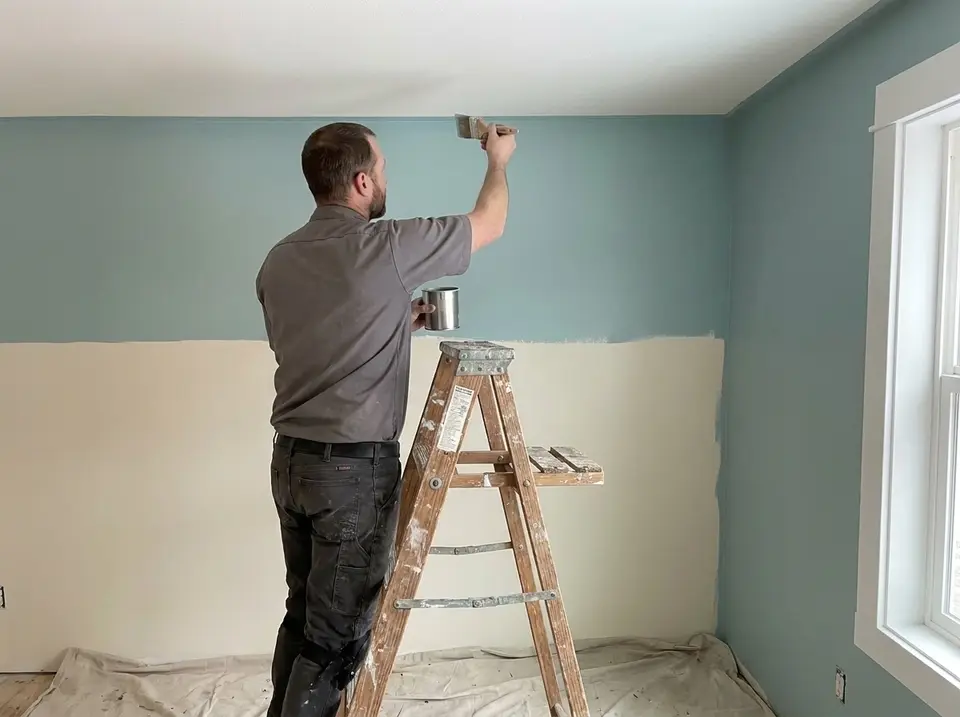
Kestrel Floorworks paints the insides of homes in Sandpoint and Bonner County: walls, ceilings, feature walls, doors and trim. Paint can be booked together with a new floor, so one visit finishes the room.
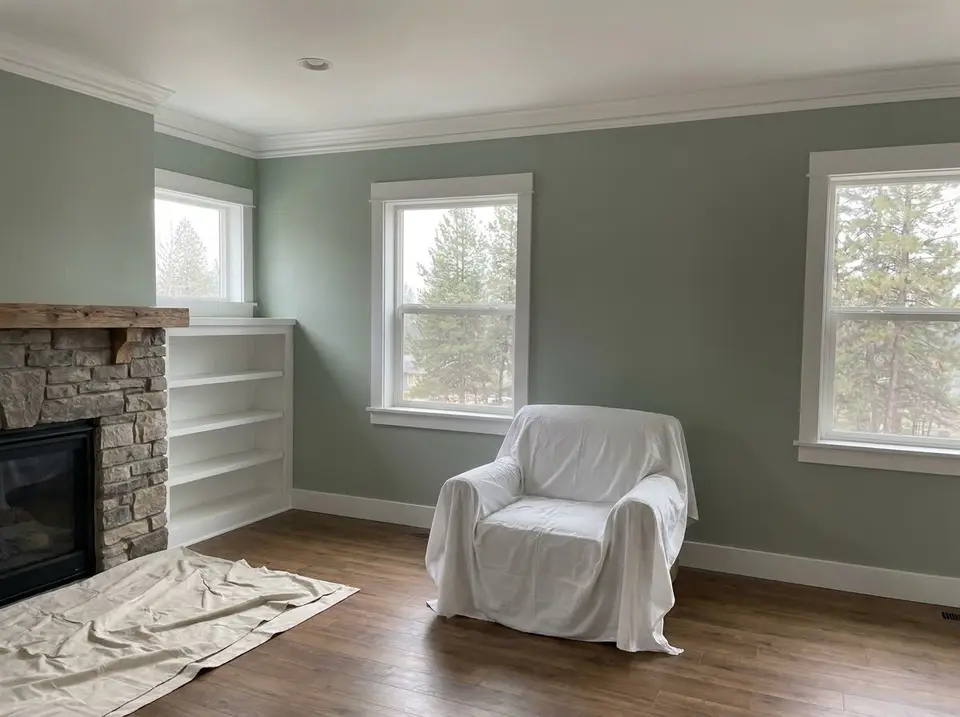
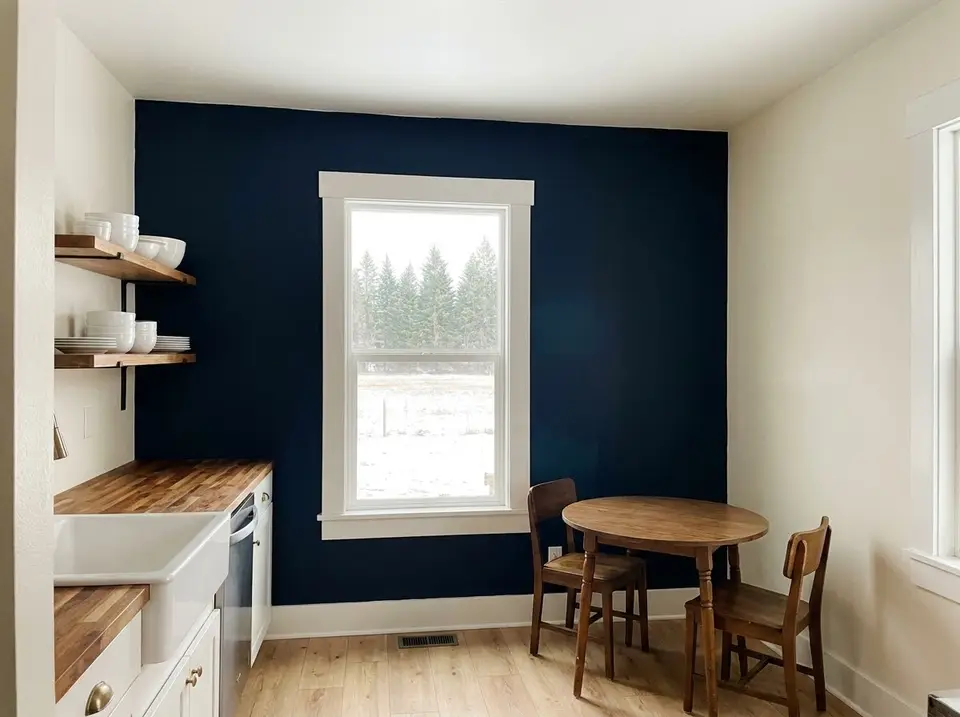
With snow on the ground for months, a lot of people here want rooms that feel warm without going dark. The rooms in the gallery show the range: a soft sage living room, a deep navy kitchen wall, a pale blue bedroom. What makes a strong color look deliberate is the line where it stops, so every edge is cut in by brush.
A new floor nearly always means baseboard coming off and going back on, and that means caulk and paint. When the same person lays the floor, fits the trim and paints the wall, nobody has to mask around someone else’s work or come back for touch-ups.


No. Kestrel Floorworks paints interiors only.
Yes, and it is the tidiest way to do it. The walls are painted first, the floor goes down, and the baseboard goes back on last.
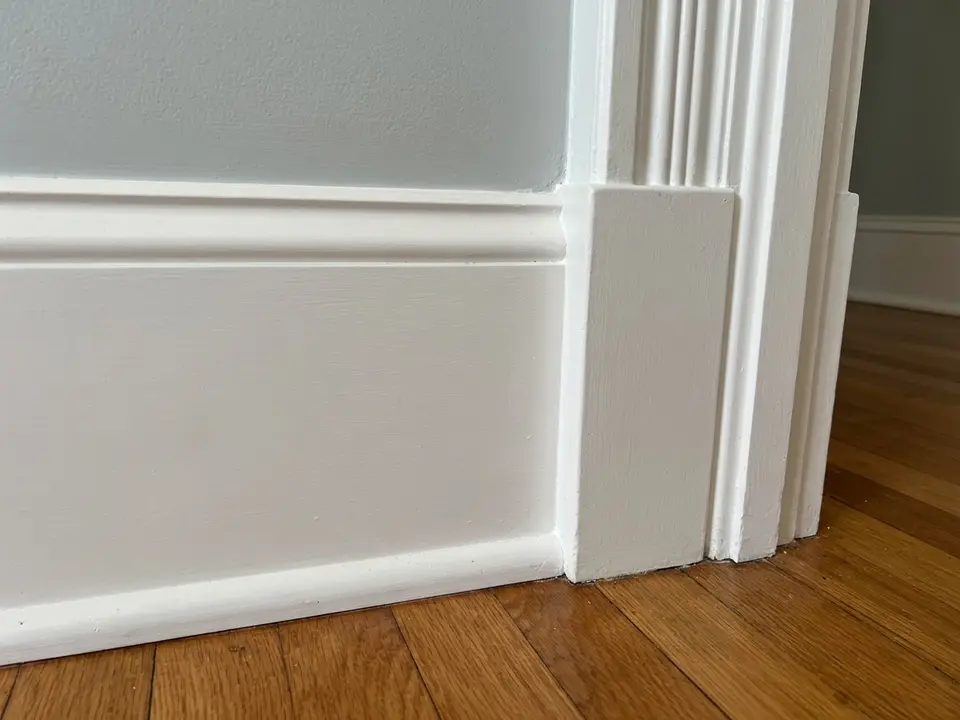
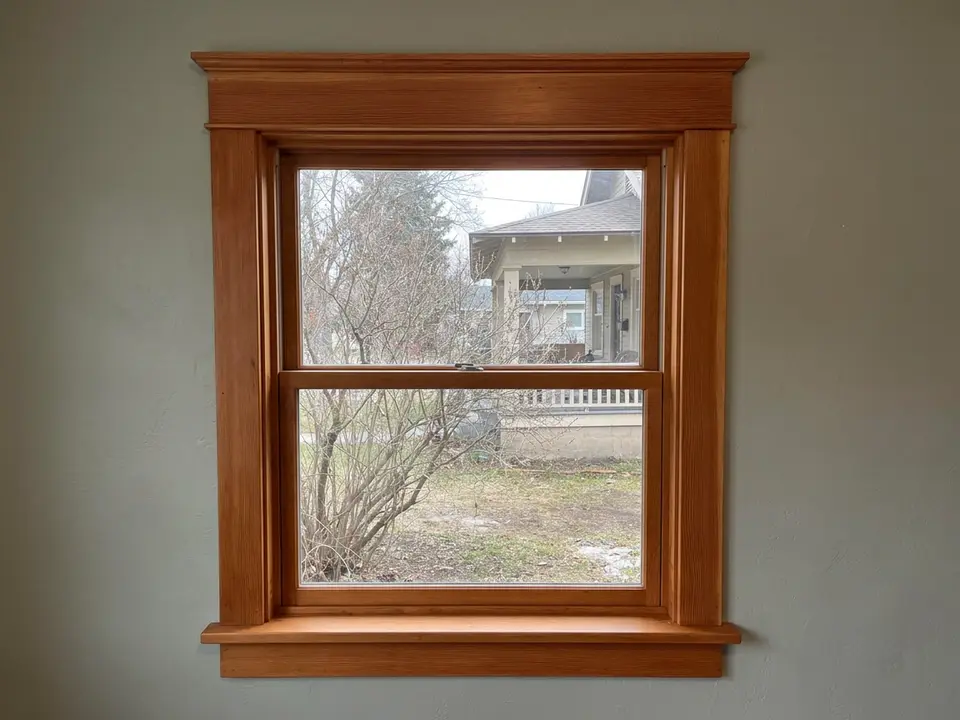
Kestrel Floorworks finishes and fits baseboard, door and window casing, crown and other detailed moulding in Sandpoint and Bonner County. Wes Hadley spent seven years trimming out lake homes before he started the business, and it is still the part of the job he enjoys most.
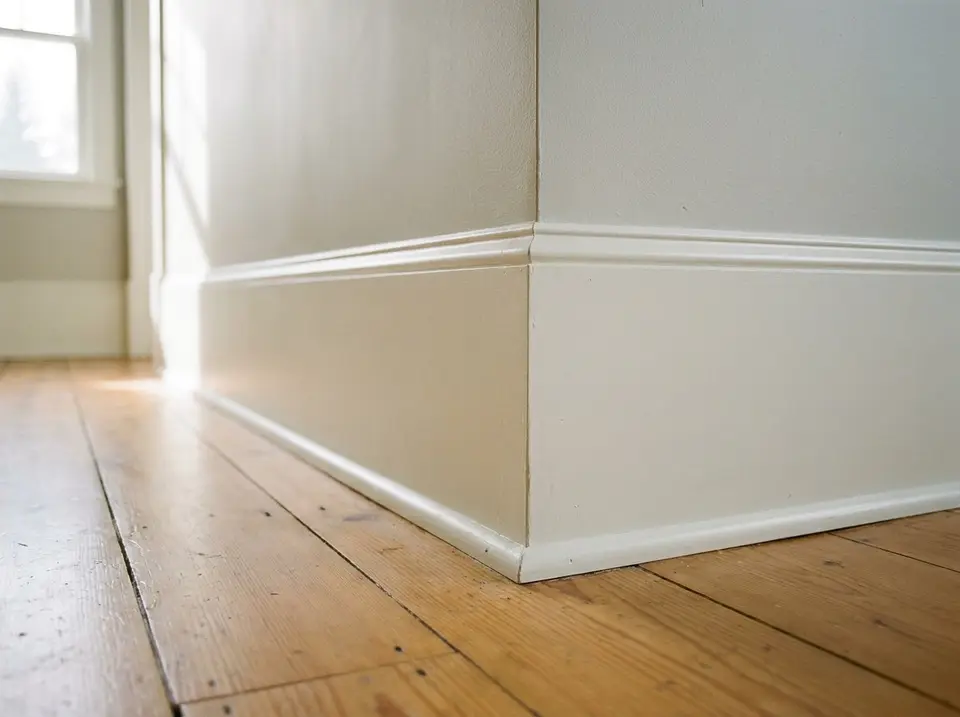
Old houses here have settled through a century of freeze and thaw. Plaster bellies out, corners are a degree or two off, and floors run downhill toward the porch. Baseboard is scribed to the wall and the floor so it sits tight without a thick line of caulk, and casing is mitred to the opening that is actually there.
Moulding is stained, sealed or painted before it goes on the wall. Every face and edge gets an even coat, and only the nail holes need attention afterwards.


Yes. The back and bottom edges of the board are scribed to follow the wall and the floor, so it sits tight without a thick line of caulk.
Yes. Kestrel Floorworks finishes and fits baseboard, door and window casing, crown and other detailed moulding.
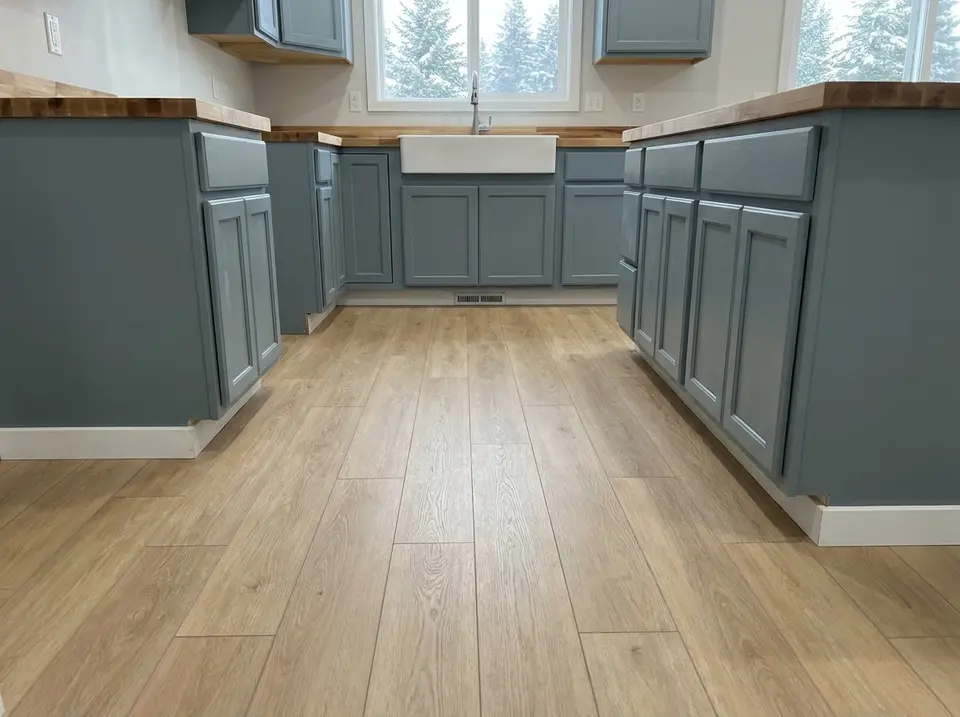
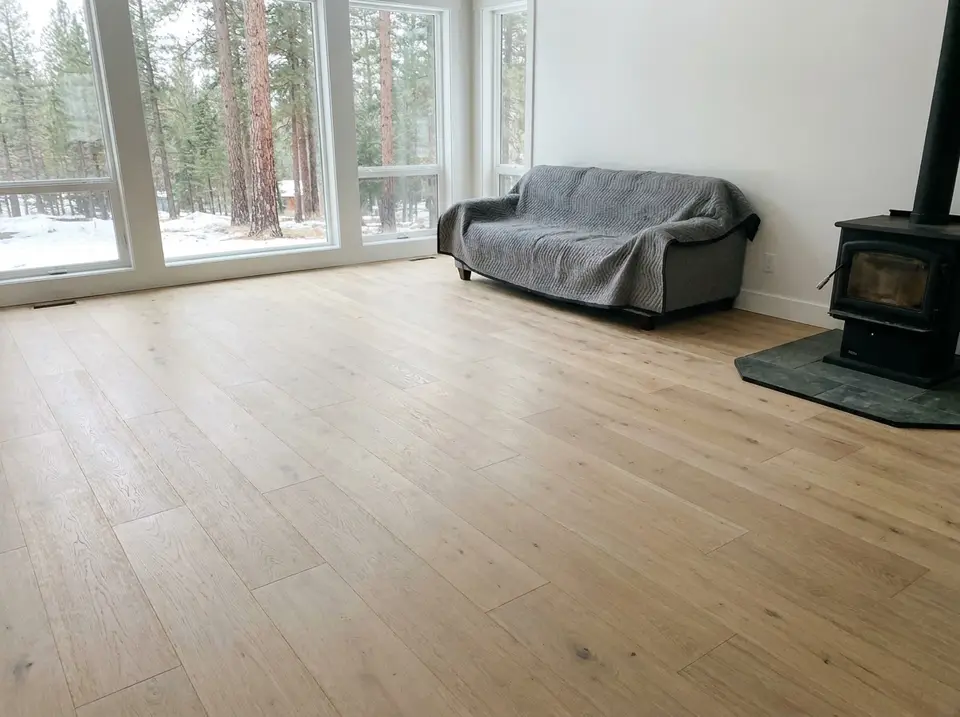
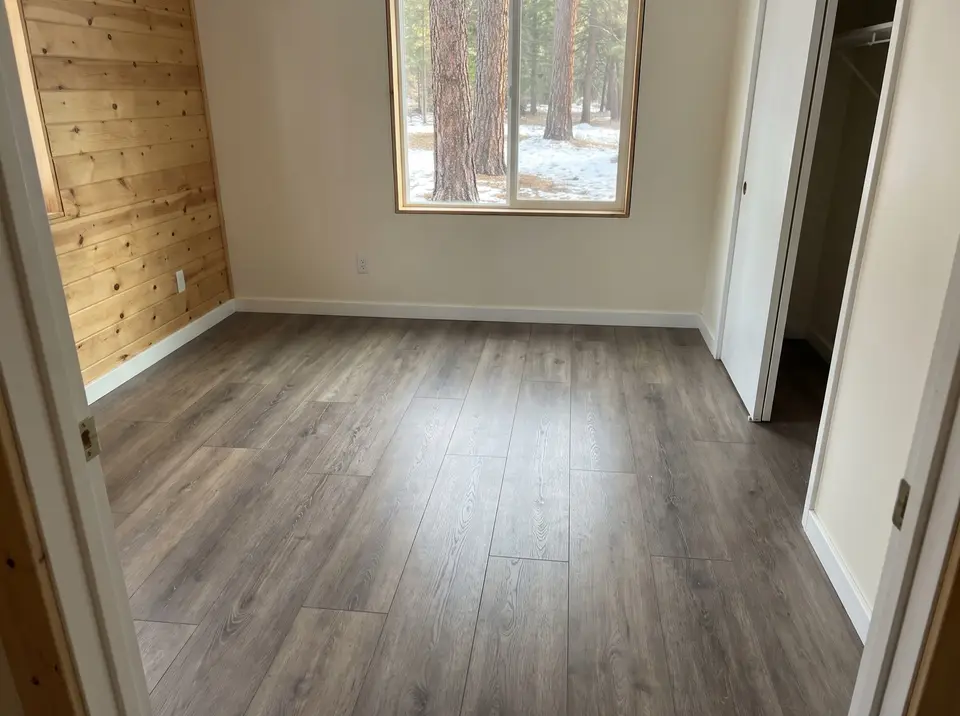
Kestrel Floorworks lays luxury vinyl plank, engineered hardwood and laminate in Sandpoint and Bonner County, and helps you choose between them. Vinyl plank is waterproof and belongs in kitchens, baths and mudrooms. Engineered hardwood puts real wood over a slab or radiant heat. Laminate keeps the cost down in dry, flat rooms with light traffic.
Vinyl plank (about $2.50 to $5 per square foot for material, 15 to 25 years) is the safer pick over laminate in most homes. Buy the thick plank with the thick wear layer, because the click joint is the part that fails and a thicker plank has a stronger one.
Engineered hardwood (about $4 to $9 per square foot, 20 to 40 years) is a real wood face on a layered core. The thin face is what you give up.
Laminate (about $1.50 to $4 per square foot, 10 to 20 years) costs the least. Look for a board 10 mm or thicker with a water resistant rating.
A click floor is only as good as the surface it sits on. Wes checks the subfloor with a long straightedge, grinds the high spots and fills the low ones before the first plank goes down. Skipping that step is the usual reason a plank floor starts to creak or separate in its second winter.


For most homes, vinyl plank. It is waterproof and flexes enough to sit well on a slightly uneven floor. It also costs a little more.
Vinyl plank or ceramic tile, because water does not harm either. Most laminate should stay out of rooms that get wet.
About $2.50 to $5 per square foot for material, with a life of 15 to 25 years. Labor is priced for each job.
Start your project
Call, text or email for a ballpark figure. A written bid comes after a visit to measure, free within 20 miles of Sandpoint.